Sorrento vs Positano: Which Is the Better Base for a First-Time Visit?
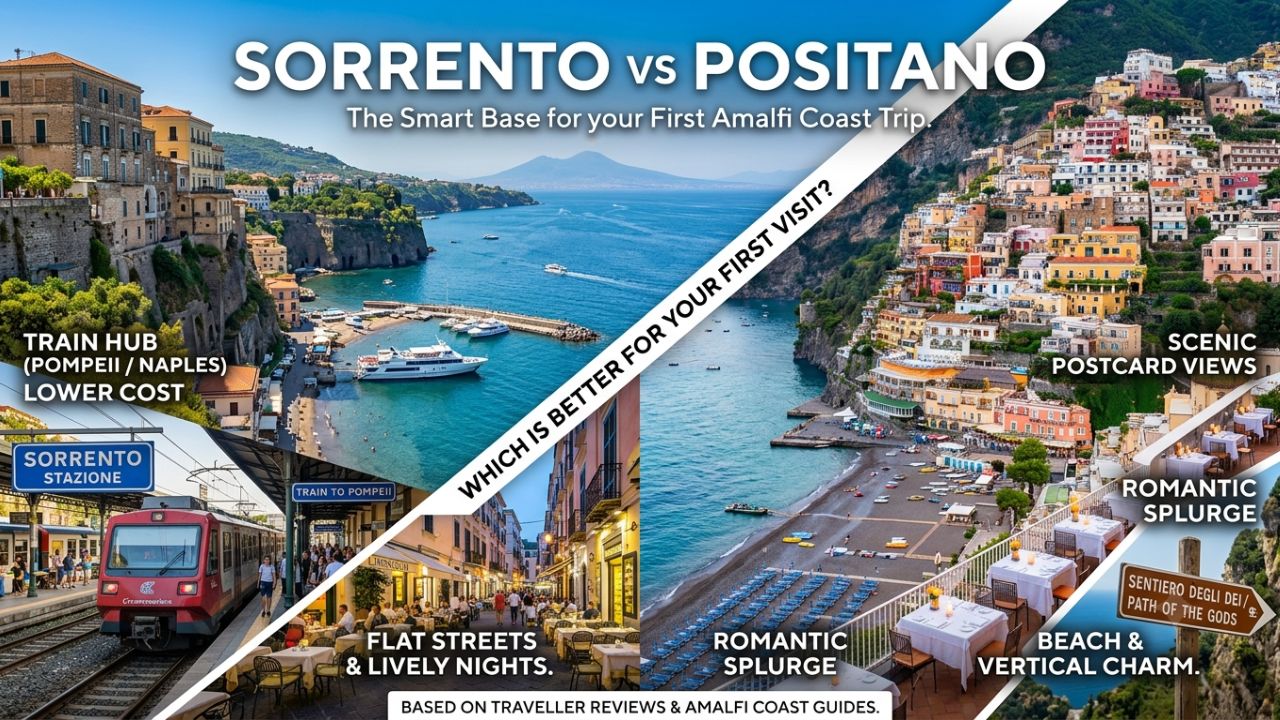
Sorrento is the better base for a first trip to the Amalfi Coast. It costs less, connects to more places, and sits right on the train line. Positano is the most scenic town. But scenic and practical are two very different things when planning five or six days on this coast.
The Sorrento vs Positano question comes up every single trip-planning season. And it makes sense. Both towns show up on every Italian bucket list. Both sit along the same stretch of coast. But they serve very different types of trips. One is a hub. The other is a stop. Pick wrong and the whole trip feels off.
This guide breaks it all down. Cost, transport, beaches, food, and vibe. By the end, the right pick should be obvious.
What Makes These Two Towns So Different?
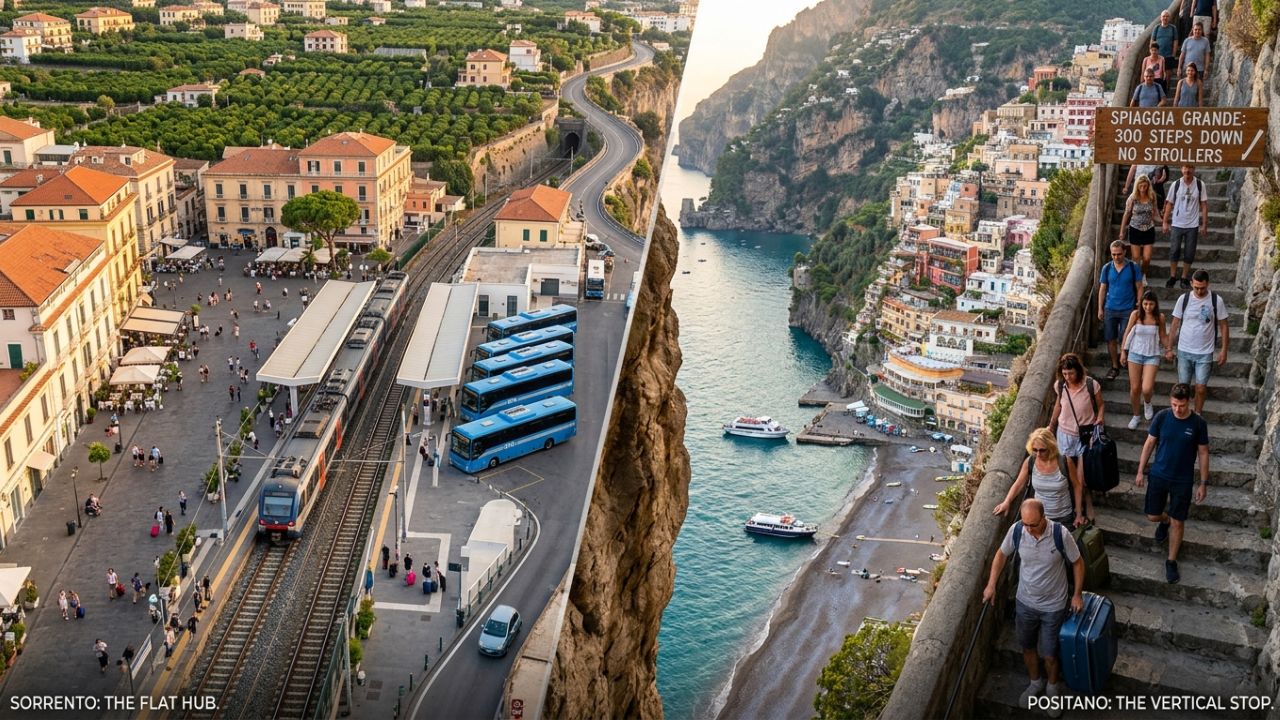
Sorrento sits on a flat cliff top above the Bay of Naples. The streets are level. Shops and cafes run along Corso Italia. Piazza Tasso buzzes at night with locals and visitors. It feels like a real Italian town, not just a resort. Lemon groves, old churches, and craft shops fill the side streets.
Positano is a vertical village. Pastel houses stack down a steep cliff face toward a pebble beach. It looks like a postcard. It also walks like a staircase. Getting from a mid-level hotel to the beach means 200 to 300 steps. That's not a figure of speech. That's the actual count. Strollers don't work here. Bad knees don't work here. But the views? Unmatched on this whole coast.
Here's the thing. Sorrento is where trips launch from. Positano is where trips slow down. Both have value. But for a first visit with a packed list, Sorrento earns the base spot.
Transport and Day Trips
This is where Sorrento pulls far ahead. The town has a real train station. The Circumvesuviana line runs straight to Pompeii in 30 minutes and Naples in about 70 minutes. Ferries leave from Marina Piccola to Capri every 30 minutes during summer. For a more relaxed way to see the island, a private Capri boat tour with swim stops skips the ferry crowds and lets the group set the pace.
SITA buses head down the SS163 to Amalfi and Ravello. One town, five major day trips, no car needed.
Positano has no train station. Not a small one. None at all. The closest rail link is back in Sorrento, 35 minutes away by a bus that often runs full in peak months. Every day trip from Positano starts with a longer ride or a pricier private transfer. Want to see Pompeii? Add an extra hour each way compared to Sorrento. Want Capri? The ferry runs less often and costs more from Positano.
For a first-timer trying to see "everything," Sorrento saves half a day of transit over a five-day trip. That's not a small win.
Cost: Sorrento vs Positano Side by Side
The budget shapes most trip plans on this coast. And the gap between these two towns is real.
| Category | Sorrento | Positano |
|---|---|---|
| Mid-range hotel per night | €120 to €200 | €280 to €450 |
| Dinner for two | €60 to €90 | €120 to €150 |
| Beach lounger per person | €15 to €25 | €35 to €60 |
| Ferry to Capri | ~€22 | ~€30 |
| Lemon granita on the beach | €3 to €4 | €7 to €8 |
Sorrento runs 30 to 50 percent cheaper across the board. A week in Positano at mid-range can cost double what the same week costs in Sorrento. And the hotel quality at each price point is roughly the same. Positano charges more for the view, not the thread count.
Budget-aware trips should base in Sorrento and visit Positano for a day. Spend the savings on a nice dinner at a cliff-side spot in Positano. That way, the views still happen without the hotel bill.
Beaches: Which Town Wins?
Neither town is a classic beach spot. But Positano has the edge here.
Spiaggia Grande is the main beach in Positano. It sits right below the village with full views of the pastel cliffside above. Fornillo Beach is smaller, quieter, and tucked between rocky cliffs. Both earned Blue Flag status. Arienzo Beach, just outside town, is even more tucked away and calm.
Sorrento doesn't have big beaches in town. The cliff-top layout means most beach access comes through lifts or long stairways down to small coves. Marina Piccola has some pebbly strips, and Puolo Beach is a short ride away. Bagni Regina Giovanna is a stunning natural pool but not a true sand beach.
For people who want beach days as a main focus, Positano gives more options. For people who plan beach time around day trips, Sorrento works fine.
Food, Nightlife, and the Evening Scene
Both towns eat well. But the feel is very different.
Sorrento has a wider food range. High-end spots sit next to small family-run places where locals eat lunch. Il Buco, a Michelin-starred spot in a 15th century cloister, shares the same streets as €8 pizza joints. Limoncello tastings are everywhere. The evening scene is lively, with bars, gelato shops, and live music around Piazza Tasso.
Positano leans upscale. Dinners on candlelit terraces above the sea feel like a movie scene. La Tagliata and Da Vincenzo are two names that come up on every food list. But expect tourist pricing at most spots. A seafood dinner for two on a terrace can hit €150 fast.
For nightlife, Sorrento wins easily. Positano gets quiet after 10 PM. Sorrento keeps going. If a lively evening matters, base in Sorrento.
Which Town Fits Which Type of Trip?
Pick Sorrento if:
- This is a first visit with plans to see Pompeii, Capri, and Ravello
- Budget matters and saving 30 to 50 percent sounds good
- Day trips are the core plan
- Mobility is a concern (flat streets, no major stair climbs)
- Traveling with kids or older family members
Pick Positano if:
- This is a honeymoon or a slow romantic trip
- The budget is open, and the daily rate doesn't sting
- Seeing the "postcard Amalfi Coast" from a hotel balcony is the goal
- Beach days and coastal hikes (like the Path of the Gods) are the focus
- Two to three nights feel like enough, not the whole trip
The Smart Move: Split the Stay
The best plan for a first Amalfi Coast visit? Use both towns. Start with two nights in Positano. Soak up the views, eat one great dinner, walk the beach at sunset. Then shift to Sorrento for the next three to four nights. Use it as a launch pad for Capri, Pompeii, and Ravello. A full-day private Amalfi Coast tour covering Positano, Amalfi, and Ravello is a great way to hit all three towns in one clean loop from Sorrento.
This split gives the romance and the views early on. Then it shifts to the practical hub for the rest of the trip. Most people who do this say it felt like two trips in one. And the Sorrento leg keeps the budget in check after the Positano splurge.
Final Take
The Sorrento vs Positano choice is simple once trip goals are clear. First timers who want to see the full coast should base in Sorrento. It saves money, saves time, and opens up every major stop.
Positano is not the wrong choice. It's just a different kind of right. For slow trips, couples trips, or return visits with no packed list, it delivers something Sorrento can't match. That cliffside view at golden hour is worth every euro and every stair.
But for trip number one? Sorrento is the call.
FAQs
Is Sorrento or Positano better for families?
Sorrento. The streets are flat, the prices are lower, and the transport links make day trips far easier with kids. Positano's 200-plus steps between hotels and the beach don't work well with strollers or tired little legs.
Can you visit Positano as a day trip from Sorrento?
Yes. A SITA bus takes about 35 minutes and costs around €2.80. Ferries also run in the summer months. Most people spend a full day in Positano and head back to Sorrento by evening. It's one of the most popular day trips on the whole coast.
Is Positano worth the higher price?
It depends on the trip. For a honeymoon or a two-night romantic stop, the higher cost buys views and a vibe that Sorrento can't match. For a five-night trip packed with day trips, the extra spend doesn't add much value.
What is the best time to visit Sorrento and Positano?
May, June, September, and early October. The weather is warm, the crowds are smaller than peak summer, and hotel prices drop 30 to 40 percent compared to July and August. Both towns share the same coast, so the best window applies to each equally.